
From sizing to the final execution: what ensures a safe splice in textile and steel cord conveyor belts.
The conveyor belt and its splice area concentrate the stresses inherent to the production process in belt conveyor equipment. That is where many unplanned stoppages begin. Executing the splice with method and measurement, and choosing the right technical products, are productivity decisions, as well as strategic decisions for the maintenance team.
For every belt: what you cannot do without
Why the splice matters
In any belt, the quality and excellence of a splice’s execution define its service life, tensile strength, operational safety and how often stoppages occur. Two execution methods stand out: Cold, where the bond is made with adhesives, with no need to apply heat and pressure in the process. Hot, applying the vulcanization parameters (heat, pressure and time) which, under control, vulcanize the splice areas and ensure greater mechanical strength.
Dew Point Monitoring Technique
Moisture condensed on the surface compromises adhesion, regardless of the belt type or method. Before joining the parts, measure the relative humidity, the air temperature and the temperature of the parts using a thermo-hygrometer and a pyrometer. Check the dew point table and, as a recommendation, only close the splice when the belt ends are at least 3 °C above that point.
Vulcanization parameters with the Hotline line
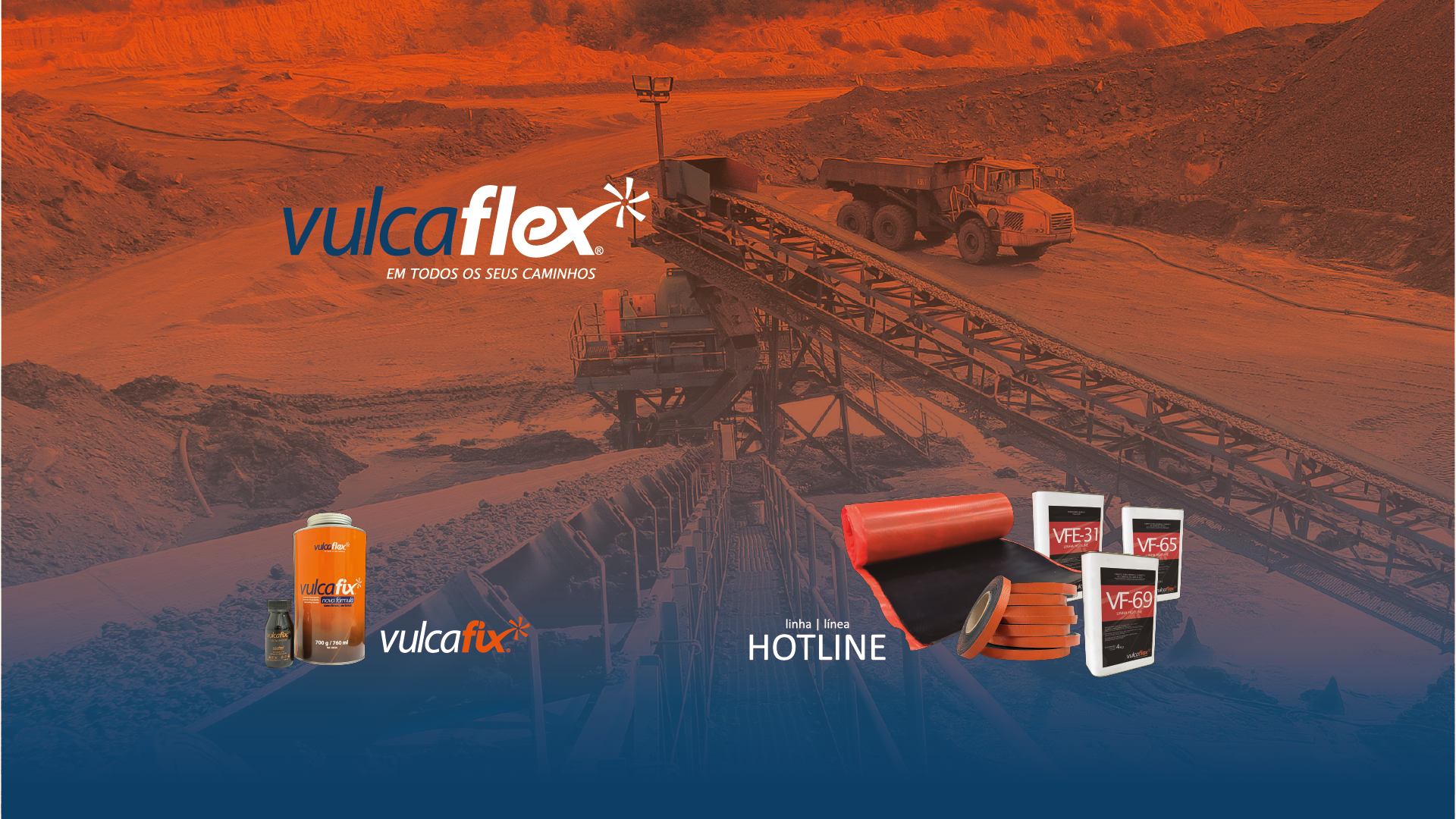
The Hotline line brings together vulcanizing cements, chemical remover, bonding rubbers and cover rubbers for hot splices. For both belt types, the vulcanization parameters with Vulcaflex materials are:
- Vulcanization temperature of 145 ± 5 °C;
- Vulcanization time of 3 minutes per millimeter of conveyor belt thickness. For safety, only open the press below 60 °C;
- Pressure varies according to the belt construction, as you will see below.
Textile belts (EP/NN)
In textile belts, the ends are cut in steps and the plies are overlapped. Here, you choose between the cold method and the hot method.
Start with the calculation
The splice length (SL) is:
SL = Bias + (Step length × No. of steps) + 100 mm
- Bias: cold, 0.5 × belt width (26° angle). Hot, 0.364 × width (20°) or 0.4 × width (22°), depending on the angle of the press platens.
- Number of steps: number of plies − 1. 2-ply belts generally use 2 steps.
- Step length: 250 mm up to 22 N/mm/ply, 400 mm for 32 N/mm/ply and 510 mm between 40 and 60 N/mm/ply. For cold splices, use the greater of this reference value and the width divided by the number of steps.
*Note: Always check the information validated by the belt manufacturer to size the splice correctly.
The extra 100 mm compensate for the top and bottom bevels. Always confirm the steps on the manufacturer’s splice drawing or according to DIN 22102-3.
Cold: speed with the new Vulcafix
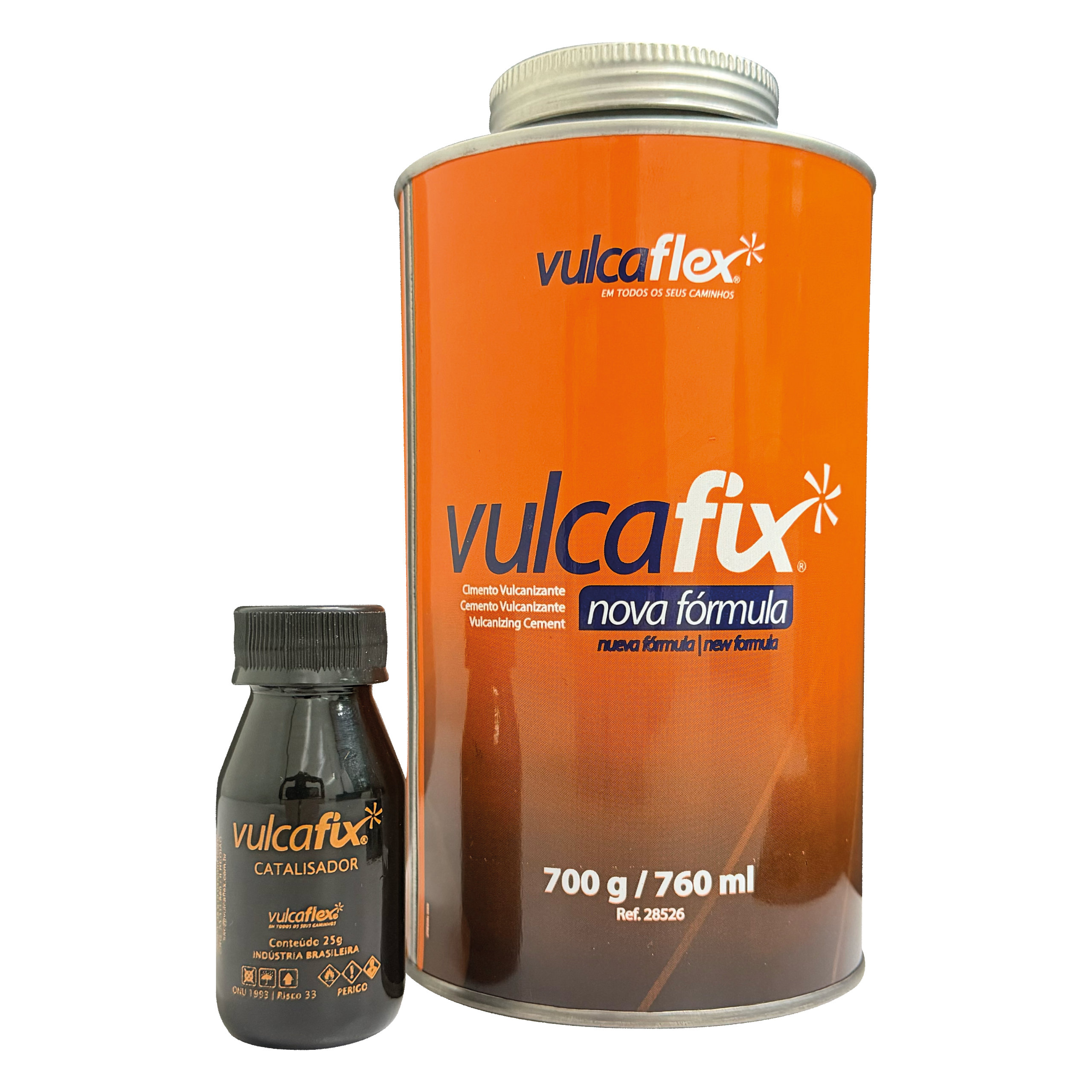
Cold splicing is faster and simpler to execute. Vulcaflex offers complete bonding systems, with chemical removers, adhesives and catalysts. The highlight is Vulcafix New Formula, graphite in color, with higher performance, greater yield per m² and a CFC-free formulation. In test specimens, it delivers average results of 18 kgf/cm² shear tensile strength, with 2 hours of adhesive curing and gelling, and a working temperature of up to 80 °C.
- Check the expiration dates and chemically clean the surface.
- Mix one flask of Vulcafix Catalyst per 700 g can and apply within 2 hours.
- Apply the 1st coat with a short, stiff-bristle brush, in circular movements from the center to the edges of the conveyor belt. Let it dry for at least 1 hour.
- Apply the 2nd coat and do the back-of-the-finger test: the adhesive should be slightly tacky, without sticking. Monitor the dew point.
- Join the surfaces, hammer them and pass the roller to remove air bubbles.
Apply between 10 and 40 °C. As a technical recommendation, the belt can return to operation 2 hours after the splice is closed.
Hot: Hotline line
It is recommended to apply two coats of VF-65 vulcanizing cement, allowing them to dry completely between coats, and VF-58 or VF-59 bonding rubber, according to the splice drawing. Vulcanization pressure: 10 kgf/cm².
Steel cord belts (ST)
In ST (Steel Cord) belts, the carcass of longitudinal steel cords is designed to withstand the tensions applied under the system’s operating conditions. They serve high-demand conveyors and long distances (Overlands), as in large-scale mining. The splice is always made hot.
Follow the manufacturer’s diagram
Length, steel cord layout, bias angle and arrangement of the components in the splice kits are shown in the belt manufacturer’s diagram, based on DIN 22131 or EN ISO 15236. The splice will have the number of stages defined by the manufacturer according to the conveyor belt’s technical specification, as well as project-specific applications.
Hot: Hotline line
Clean the cords with VFE-31 Chemical Remover and wait for the solvent to evaporate completely. Apply two coats of VF-69 vulcanizing cement, allowing them to dry completely and checking the tack between coats. Next, position the bottom rubber sheet, fill between the cords with bonding rubber strings, position the top sheet over the splice area, close the vulcanizing press and vulcanize at a pressure of 12 kgf/cm².
The right splice, a compliant operation
Correct calculation, a controlled environment and a quality product: this combination keeps the conveyor belt at operational quality.
Talk to a Vulcaflex consultant on WhatsApp +55 (34) 3233-5200.